Are Black Cats Really Bad Luck?
Quick Summary (Key Takeaways)
- Black cats are not actually bad luck. The belief comes from medieval European superstition, not science or evidence.
- The myth began with religion and fear. In the 13th century, the Church linked black cats to witchcraft and the Devil.
- Your brain reinforces the belief. Cognitive biases like confirmation bias make random events feel meaningful.
- Not all cultures agree. In Japan, Scotland, and maritime traditions, black cats are considered symbols of good luck.
- The superstition still has real effects. Black cats are adopted less often and are still affected by centuries-old beliefs.
Are Black Cats Bad Luck?
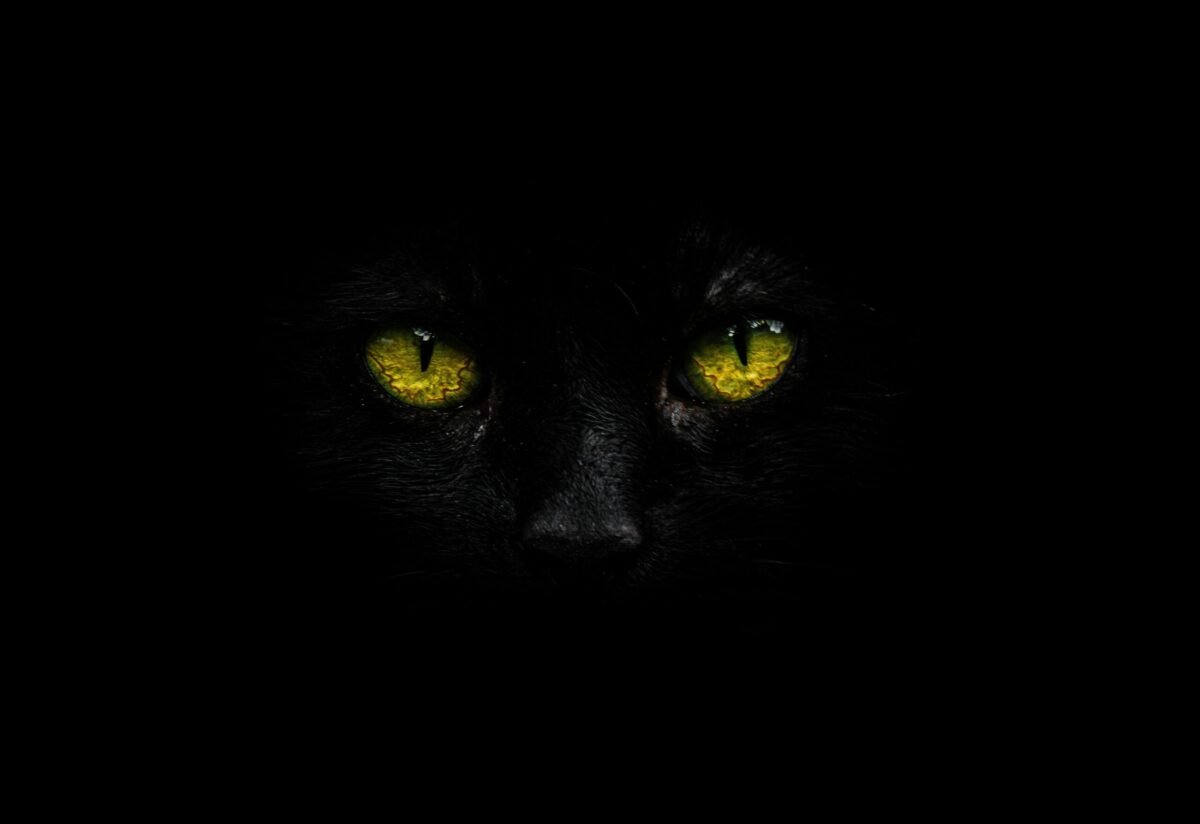
The belief that black cats bring bad luck is one of the oldest superstitions in human history. Black cats are considered unlucky because medieval superstition linked them with witchcraft, demons, and misfortune. Black cats are not scientifically linked to bad luck.
Table of Contents
Why Do People Think Black Cats Are Bad Luck?
A black cat slips across your path. Someone gasps. Someone else laughs it off. Someone quietly takes a different route.
No other animal generates that split-second, full-body reaction in quite the same way. Not a crow, not a spider — a sleek, silent, ink-coloured cat.
The superstition around black cats is one of the most persistent in the Western world. Polls in the UK and US consistently show that between 13 and 25 percent of adults still consider them unlucky. That number spikes around Halloween, when animal shelters report a documented decline in black cat adoptions — and in some cases, a spike in cruelty incidents.
This is not a harmless quirk of folklore. Real animals are affected. Which makes the question worth asking seriously: where did this idea come from, and how did it survive so long?
Where Did the Black Cat Superstition Come From?
The Latin word for cat — cattus — appears in Roman texts around the 4th century CE, eventually producing the Old English cat and the French chat. The word is thought to be borrowed from a Berber or North African root, which makes sense: the domestic cat’s story begins in North Africa.
In Ancient Egypt, the cat goddess Bastet was depicted with a black feline head. Cats were mummified, mourned, and legally protected. Killing one — accidentally or not — was a serious crime. Black, here, wasn’t sinister. It was divine.
The pivot happened in medieval Europe. In 1233, Pope Gregory IX issued the papal document Vox in Rama, which described heretical practices and specifically linked black cats to the Devil. The Church’s growing campaign against paganism needed symbols. Cats — already associated with women who lived alone, with night-time, with the untamed — became ideal targets.
Callout Box: The papal decree of 1233 directly naming black cats as diabolical is the single most consequential moment in the animal's folkloric history — it transformed centuries of positive association into nearly a millennium of suspicion.
The word witch derives from Old English wicce, meaning a woman who practices sorcery. By the 16th century, the image of the witch was inseparable from her familiar — an animal spirit companion. Black cats topped the list. Court records from the Scottish witch trials of the 1590s repeatedly name black cats as evidence of diabolical association. King James VI of Scotland (later James I of England) was personally obsessed with witchcraft, and his patronage of witch-hunting literature hardened the mythology further.
The crossing-the-path belief appears to have solidified in 17th-century England, likely imported into colonial America by Puritan settlers. By the Salem witch trials of 1692, black cats had become so strongly coded as evil that owning one was considered circumstantial evidence of guilt.
Alternative Theory: Some folklorists suggest the black cat’s dark reputation has as much to do with visibility as with theology. A black cat is nearly invisible at night — it appears from nowhere, crosses your path, vanishes. The shock of something emerging suddenly from darkness may have triggered primitive fear responses that were later narrativised into supernatural meaning. The cat, in this reading, didn’t need a papal decree to feel uncanny. It was already doing it on its own.
Why Do We Still Believe Black Cats Bring Bad Luck?
No peer-reviewed study has ever found a statistically significant relationship between a black cat crossing someone’s path and a subsequent negative event. This has been tested. The connection isn’t there.
What is there is the human brain’s compulsive tendency toward apophenia — the detection of patterns in random noise. Our ancestors who saw a rustling bush and assumed predator survived at higher rates than those who assumed coincidence. The over-detection of patterns was adaptive. In a world without GPS or data, attaching meaning to animal behaviour made sense.
Confirmation bias does the rest. After a black cat crosses your path, you unconsciously register every minor misfortune that follows — the spilled coffee, the missed bus — as confirmation. The dozen days when nothing bad happened after a black cat sighting? Those disappear from memory entirely.
Psychologists call this the availability heuristic: we judge the probability of an event by how easily examples come to mind. Because the black cat-bad luck link has been culturally reinforced for centuries, the association fires instantly and feels like evidence, even though it’s just noise.
Callout Box: Confirmation bias and the availability heuristic explain why the superstition feels true even to people who know it isn't — the brain retrieves confirming examples faster than disconfirming ones.
Black Cats Today: From Medieval Fear to Internet Icons
The 20th century both preserved and complicated the black cat’s mythology. Halloween commercialisation from the 1920s onward turned the black cat into a branded symbol of spookiness — cemented in clipart, costumes, and candy wrappers. The image became so culturally saturated that it stopped feeling like real belief and started feeling like decoration.
Then the internet happened. Black cats became stars. Lil Bub, Grumpy Cat (not black, but the template), and hundreds of viral black cat accounts dismantled centuries of sinister iconography with a single weapon: cuteness. A generation raised on cat memes is measurably less likely to hold superstitious beliefs about them than their grandparents were.
In fashion and pop culture, black cats have become symbols of independence, mystique, and feminine power — reclaimed precisely because of their witchy associations. Sabrina the Teenage Witch’s Salem, the cats in Coraline, the black cat motif in countless tattoo parlours — these don’t carry fear. They carry aesthetic cool.
Still, the shelter data tells a more complicated story. Black cats are consistently the last to be adopted from shelters — a real-world downstream effect of a medieval superstition. Researchers at the University of California, Berkeley found that black dogs and cats wait significantly longer for adoption, a phenomenon sometimes called “black dog syndrome” (and its feline equivalent). That’s not folklore. That’s a measurable consequence of folk belief.
Are Black Cats Good or Bad Luck in Different Cultures?
The black cat’s symbolic meaning is not universal. It shifts dramatically depending on geography — which is itself evidence that the meaning is culturally constructed, not inherent to the animal.
| Region | Verdict | What They Believe |
| Ancient Egypt | Sacred | Associated with Bastet, goddess of home and protection. Killing a cat was punishable by death. |
| Medieval Europe | Diabolical | Linked to witchcraft and the Devil via papal decree. Widespread persecution during plague years. |
| Japan | Good Fortune | The Maneki-neko (beckoning cat) is often black. A black cat crossing your path is a positive omen. |
| Scotland & Ireland | Prosperity | A black cat arriving at your home signals forthcoming prosperity. Opposite of the English tradition. |
| Sailors (Global) | Lucky at Sea | Sailors’ wives kept black cats at home to protect their husbands. Black cats on ships were prized. |
| USA & Modern West | Contested | The bad-luck belief persists statistically, but pop culture is actively eroding it among younger generations. |
Callout Box: In Scotland, a black cat appearing on your doorstep is traditionally a sign of incoming prosperity — the exact opposite of the English and American superstition, despite sharing a language and a border.
Fun Fact
Did You Know? The mass killing of cats during medieval Europe’s plague years may have accelerated the Black Death — by eliminating the primary predator of the rats carrying plague-infected fleas. The superstition that black cats were evil may, ironically, have helped cause one of history’s greatest human catastrophes.
FAQ
Are black cats actually bad luck?
No scientific evidence supports the claim. The belief is a medieval European superstition rooted in religious persecution, perpetuated by confirmation bias.
Why are black cats associated with witches?
13th-century Church doctrine linked black cats to the Devil, and by the 16th century they became the standard “familiar” — spirit companion — of the witch archetype in European folklore.
In which countries are black cats considered good luck?
Japan, Scotland, Ireland, and among maritime cultures globally — sailors and their families traditionally viewed black cats as protective and lucky.
Do black cats get adopted less often?
Yes — studies consistently show black cats and dogs wait significantly longer for adoption, a real-world impact of persistent superstition sometimes called “black dog/cat syndrome.”
What does a black cat crossing your path mean?
In Western European and American tradition, bad luck; in Japanese and Scottish tradition, good luck — the same event carries opposite meanings depending on culture.
Were black cats really killed during the Black Death?
Yes — medieval Europeans, believing cats to be linked to witchcraft, killed large numbers of cats, which may have worsened the plague by allowing rat populations (and their fleas) to expand unchecked. This is a widely cited theory among historians, though definitive causation is difficult to establish.
Are there any similar superstitions?
Yes — many superstitions across different cultures revolve around the idea of attracting or avoiding bad luck. These beliefs often share a common theme: protecting oneself from unseen forces or misfortune.
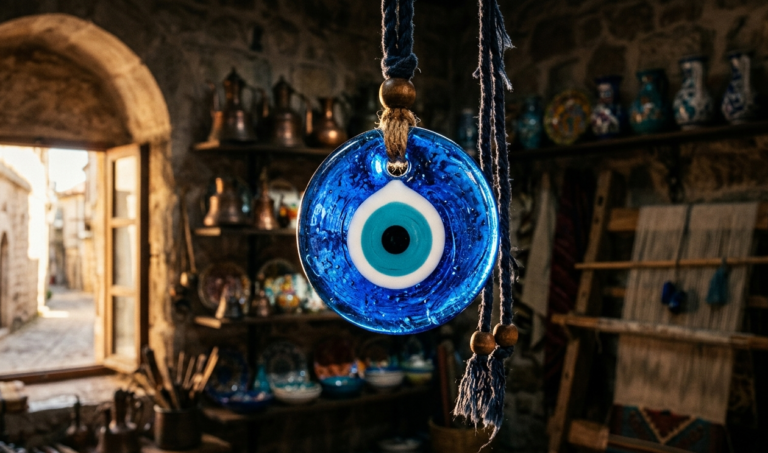
For example, the evil eye is believed to bring harm through envy or negative energy, On the other hand, practices like knocking on wood are used to prevent misfortune or “cancel out” bad luck.