Spiral Symbol Meaning: The Oldest Shape in the World Explained
Quick Summary
- The spiral is one of the oldest symbols in human history, appearing across cultures often separated by vast distances — in many cases with no clear evidence of direct contact.
- Unlike a circle, the spiral does not repeat — it evolves. Every revolution returns you to the same angle but never the same place.
- The spiral encodes both creation and destruction: it is the shape of growth, consciousness, and time — but also of obsession, descent, and collapse.
Table of Contents
A Shape That Carries a Question
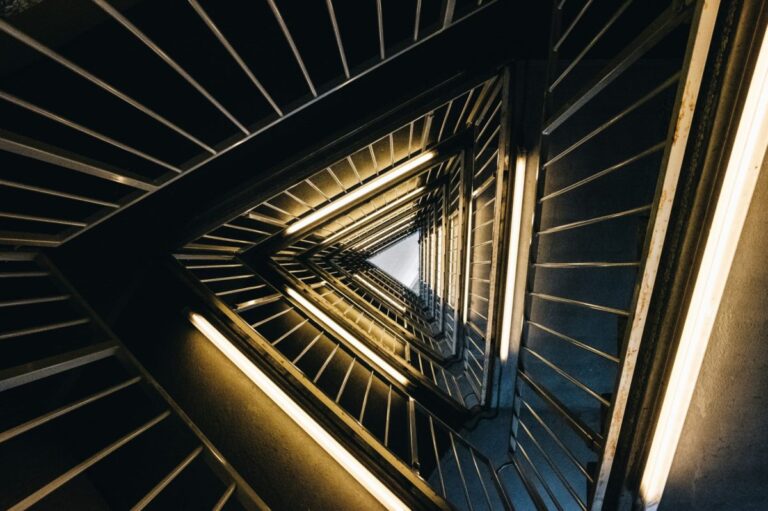
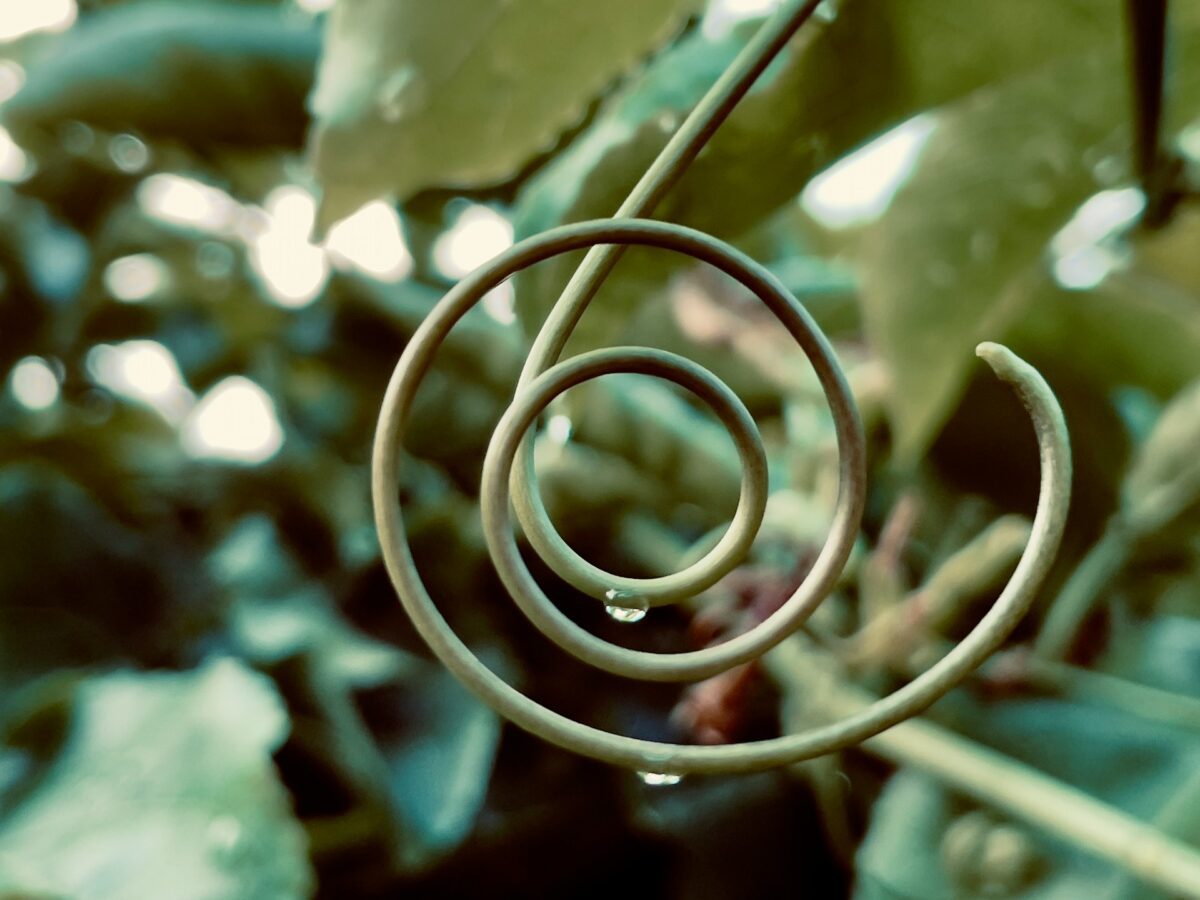
Here is the oldest riddle in human visual culture: you leave a point, you curve outward, you keep turning — and you never come back to where you started. You come back to the same angle. The same direction. But somewhere further out. Somewhere higher up.
That is not a circle. That is time.
Ancient peoples understood this without calculus. At Newgrange, Ireland, built around 3200 BCE — five centuries before the first pyramid — a megalithic tomb was engineered so precisely that once a year, on the winter solstice, a single shaft of sunlight travels 19 meters down a stone corridor to illuminate a triple spiral on the far wall. Seventeen minutes. Then darkness again for another year. It can be read as a statement about time: the sun left, and it came back — but the world that received it had moved on.
The same symbol appeared independently in Crete, the Indus Valley, ancient Japan, the American Southwest, and among the Māori of New Zealand. No trade route connected them. No shared script. Yet the spiral arrived everywhere anyway. The question is not what it means. The question is why every human civilization, working alone, reached for the same shape to answer the same questions.
Etymology and Ancient Origins: The Word That Breathes
The English word spiral enters through the Latin spiralis, derived from spira — a coil, a twist. But dig further and you reach the Greek speira, which meant both a rope twisted into coils and the act of breathing itself. The same root that gave us spirit and respiration. Ancient Greeks were not being poetic when they called the spiral a breath shape. They were being precise.
In ancient Egypt, spiral amulets carved from faience appeared in tombs as early as 2600 BCE, representing the sun’s journey and cyclical regeneration. The hieroglyphic shen ring — an oval loop of rope with a horizontal base — evolved from spiral forms and signified eternity and royal protection. Archaeologist Marija Gimbutas, in her landmark 1989 study The Language of the Goddess, catalogued thousands of spiral markings from Neolithic European figurines and argued that the symbol was inseparable from the cult of a life-giving goddess: water, regeneration, and the rhythms of the female body.
Plato added a different dimension entirely. In The Republic, his vision of the Spindle of Fate describes the universe as a vast rotating apparatus, spinning each planetary sphere at a different speed toward its inevitable return. The three Moirae work this spindle: Clotho spins the thread of life, Lachesis measures its length, and Atropos cuts it. The spiral, here, is not a decoration. It is the machinery of destiny — the irreversible coiling from birth toward death, turning whether you watch it or not.
The spiral shares its linguistic root with “spirit” and “respiration” — ancient Greeks understood the coiling form as a breath-shape, not a decoration.
Whether or not Gimbutas’ goddess thesis holds across all cultures — and archaeologists still debate it — her core observation stands: the spiral clusters around thresholds. Birth. Death. Season change. The entrance to the underworld. It marks the edges of things.
Alternative Theories: The Entoptic Explanation
Not everyone traces the spiral to cosmic symbolism. Cognitive archaeologists David Lewis-Williams and Thomas Dowson proposed in their 1988 paper in Current Anthropology that spirals — along with dots, grids, and zigzags — are entoptic phenomena: geometric patterns generated by the human nervous system during altered states of consciousness. In other words, when you close your eyes hard enough, or enter trance through drumming, fasting, or fever, your visual cortex produces spirals. You see them whether you are a Paleolithic hunter in France or a contemporary meditator in Tokyo.
Under this model, the spiral is not a cultural invention. It is a biological broadcast. Every human nervous system, under sufficient pressure, projects it. That would explain the convergence across civilizations — it was never transmitted. It was always already there, waiting behind the eyes.
Psychological and Scientific Analysis: What the Universe Already Knew
Mathematician Leonardo Fibonacci did not invent the spiral. He described a pattern that nature had been running for hundreds of millions of years. The Fibonacci sequence — where each number is the sum of the two before it — produces a ratio that approximates 1.618, known as the golden ratio or phi. When you plot this ratio as a curve, you get the spiral form found in nautilus shells, sunflower seed arrangements, hurricane systems, the arms of spiral galaxies, and the double helix of DNA.
Nature uses the spiral because it is efficient. A spiral allows for maximum packing in minimum space while permitting continuous growth without structural change. The nautilus does not rebuild its shell — it simply extends the existing curve. This is what mathematicians call permanence of form despite asymmetrical growth: the shape remains geometrically identical even as it expands. Ancient peoples had no calculus, but they carved this truth into stone anyway. Not every natural spiral follows this ratio precisely — but the human impulse to find the golden proportion everywhere may itself be part of the story.
Psychologist Carl Jung saw this as a physical metaphor for psychological growth. In his model of individuation — the process by which a person becomes whole — progress is not linear. The psyche keeps returning to the same territory: the same fears, the same unresolved knots. But each return arrives from a wider orbit. You are not back where you started. You are one full revolution further out, looking at the same wound from a place you could not have stood before.
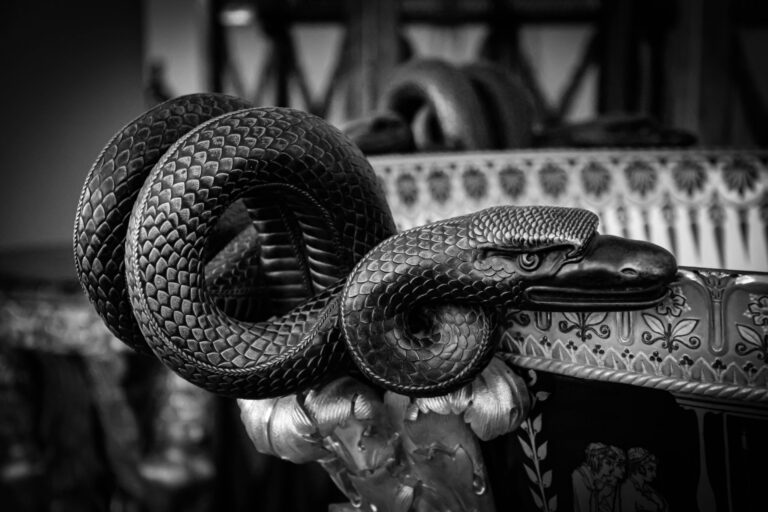
The caduceus — the staff carried by Hermes, entwined with two serpents — encodes this same dynamic in anatomical terms. In Hindu and yogic traditions, the two snakes map directly onto the ida and pingala nadis: the twin energy channels that spiral around the central sushumna column of the spine. Left and right. Solar and lunar. The double spiral is not symmetry for its own sake — it is the diagram of opposing forces held in productive tension.
The caduceus of Hermes and the yogic nadi system describe the same thing: two spiraling forces in dynamic balance around a central axis — a diagram found across multiple healing traditions that worked with opposing forces.
Cultural Evolution: From Tombs to Tattoos
The Celtic triskelion — three interlocking spirals — is one of the most persistent visual symbols in European history. Found on the Newgrange entrance stone, later adopted by the Isle of Man, Sicily, and Brittany, the triskele encodes motion itself. Three arms spinning from a common center suggest perpetual movement — the sun across three seasons, the three phases of the moon, or the Celtic triple goddess. It never stops turning.
In Māori culture, the koru — a spiral based on the uncurling frond of the silver fern — represents new life, growth, strength, and peace. It appears in traditional tā moko (facial tattooing) as a marker of identity and lineage, each curve encoding family history. In Japan, the tomoe — a comma-spiral pattern, often paired or tripled — appeared on samurai family crests and Shinto shrine drums, representing the dynamic, turning forces of the universe.
Hinduism and Buddhism both use the spiral in sacred geometry. The chakra system, mapped onto the body as energy centers, is visualized as spinning vortices. The conch shell — its interior a perfect logarithmic spiral — is one of the eight auspicious symbols of Tibetan Buddhism, associated with the far-reaching voice of the Buddha’s teachings.
The Spiral Across Cultures
Mesoamerica: The Aztec wind god Ehecatl wore a spiral shell as a breastplate. The spiral symbolized the breath of creation — wind that set the cosmos in motion. The caracol (snail/spiral) appears on temples aligned with Venus’s orbit, encoding astronomical knowledge in architectural form.
Ancient Egypt: Beyond the shen ring, spiral patterns appear on faience tiles from the palace of Amenhotep III at Malkata and in the water spiral motifs that decorate ceremonial vessels. The spiral was linked to the flooding of the Nile — cyclical abundance, destruction, and renewal.
Dogon and Bambara (West Africa): Among the Dogon of Mali, the spiral represents the primal vibration of creation — the first tremor from which all living things emerged. The Bambara carry this further: their supreme deity Faro is envisioned at the center of the world as a spiral form, governing the universe from that still point. According to Bambara cosmology, Faro embarks on a great inspection journey every 400 years, wearing a woven hat containing eight spiraling whorls — a crown that marks the ordering of the cosmos.
Lulua (Central Africa): Among the Lulua people of present-day Democratic Republic of Congo, spirals function as a numerical and cosmic hierarchy. The Earth is represented by two spirals. The Moon by three. The Sun — the greatest celestial body — by four. The more spirals, the greater the cosmic weight. A symbol that encodes ranking through repetition rather than scale.
Aboriginal Australia: Concentric circle and spiral motifs in Dreamtime rock art and sand drawings represent sacred sites, water sources, and the paths of ancestral beings. The spiral is literally a map — of land, time, and spiritual geography simultaneously.
Medieval Europe: The labyrinth — a walking spiral laid into cathedral floors at Chartres, Amiens, and Reims — was used as a pilgrimage substitute. Walking the inward and outward path was meant to mirror the journey to Jerusalem and back. One path. No dead ends. Only the turning.
Among the Lulua of Central Africa, the number of spirals in a symbol encodes cosmic rank: two for Earth, three for Moon, four for the Sun — a numerical theology written in curves.
The Dark Side of the Spiral
Every symbol has a shadow. The spiral’s is this: the same shape that carries you outward can pull you inward. And inward. And inward — until there is no center left to reach.
The phrase downward spiral exists in almost every modern language. We use it for addiction, grief, financial collapse, mental illness — any system that feeds on itself until it consumes the thing it started with. This is not a metaphor borrowed from physics. It is an ancient recognition. The spiral that expands is growth. The spiral that contracts is a trap. The geometry is identical. Only the direction changes.
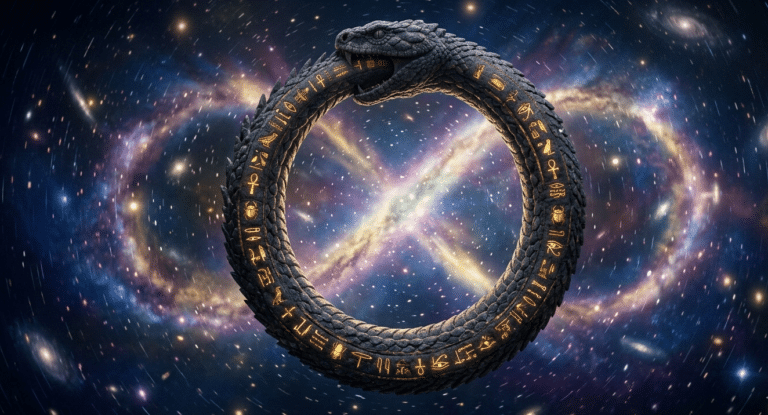
Ancient cultures knew this duality intimately. The Voodoo deity Dan — the rainbow serpent who encircles the world in an eternal spiral to hold it from falling apart — is described in some traditions as bisexual, consuming its own tail. The image is stabilizing and terrifying in equal measure. The world is held together by something that, if it ever let go, would devour everything.
Here is where the psychological pull of the spiral becomes clearest. Neurologically, spiral patterns trigger a specific kind of attentional capture — the eye follows the curve inward, expecting a resolution that never arrives. This is why hypnotists use rotating spirals, why whirlpools fascinate even as they frighten, why Junji Ito’s Uzumaki works as horror: the spiral promises an answer at the center and delivers only more spiral. It is the visual form of compulsion. You cannot look away because you are always almost there.
Plato’s Spindle of Fate carries this shadow too. The machinery turns whether you consent or not. Atropos — whose name means she who cannot be turned — cuts the thread at a moment no one chooses. The spiral of a life does not ask permission to end. It simply completes its rotation and stops.
The spiral that expands is growth. The spiral that contracts is a trap. The geometry is identical. Only the direction changes.
Modern Life: The Spiral That Never Left
Open any design app today and the golden spiral is in the toolbar. Apple’s logo is often claimed to have been laid out using golden ratio guides — a story the design community has debated for years without resolution. The spiral appears in logo design, urban planning, film composition, and fashion — designers have internalized the symbol without necessarily knowing its mythic history. The instinct preceded the theory.
In popular culture, the spiral carries its oldest meanings almost intact — both of them. Hayao Miyazaki’s Spirited Awayuses the spiraling bathhouse structure to mirror a protagonist’s inward psychological descent and return: the benevolent spiral, the journey that transforms. Junji Ito’s Uzumaki uses the same geometry for dread: a town consumed by its own obsession with the form, folding inward until nothing human remains. Two artists. The same shape. Opposite poles of the same ancient understanding.
Therapeutic labyrinths — walking spirals installed in hospitals, retreat centers, and parks — have seen a significant revival since the 1990s. Researchers including Dr. Lauren Artress of Grace Cathedral, San Francisco, have documented measurable reductions in anxiety following labyrinth walks, suggesting the spiral path activates something quieter than ordinary linear movement. The body knows the shape, even when the mind has forgotten its name.
We live in a culture that insists on linear time. Progress. Milestones. A straight line from birth to achievement to death. But the spiral keeps returning — in our symbols, our nervous systems, our stories — to remind us of something older: you do not return to the same place. You return as someone else. The point on the coil looks identical to last year’s point. But you are one full revolution further out. That is not repetition. That is how things grow.
DID YOU KNOW?
In some interpretations of Bambara cosmology, a woman conceives not through physical contact alone but through the ear — the man’s “word” and seed enter her body as a sound, coiling into a spiral inside the ear canal before descending to quicken the womb. In this belief system, the ear is a sexual organ, and the spiral is the shape of life’s very first movement. The Bambara did not know about cochlear anatomy. But the inner ear is, in fact, a perfect logarithmic spiral.
FAQ
What is the spiritual meaning of the spiral symbol?
Across most traditions, the spiral represents cyclical growth, death and rebirth, and the journey of consciousness — but it also encodes descent and entrapment, depending on its direction and cultural context.
What is the oldest known spiral symbol?
The triple spiral carved at Newgrange, Ireland, dates to approximately 3200 BCE, making it one of the oldest known examples of intentional spiral art in the world.
Why does the spiral appear in so many different cultures?
Leading theories include universal human experiences of cyclical time and nature, and the neurological fact that the visual system generates spiral patterns during altered states of consciousness — meaning the symbol may be hard-wired into human perception.
What does a spiral tattoo mean?
Depending on tradition, spiral tattoos represent growth, continuity, ancestral connection (as in Māori koru), or personal transformation — but in some contexts they also reference struggle, descent, and recovery.
What is the difference between a spiral and a circle in symbolism?
A circle represents eternal return — the same point, endlessly. A spiral represents evolution: it returns to the same angle but never the same place, making it the symbol of time, growth, and irreversible change.
What does “downward spiral” mean symbolically?
The downward spiral represents a self-reinforcing cycle of decline — the same geometric logic as growth, but inverted: each revolution pulls inward rather than expanding outward, mirroring addiction, grief, or systemic collapse.
If the spiral opened the door for you, our complete guide to the 7 most powerful ancient symbols and numbers walks through all of them — what they share, why they survived, and what they still mean today.