The 7 Most Powerful Ancient Symbols and Numbers — A Complete Guide
Humans have been drawing on walls for at least 40,000 years. Long before alphabets, before written language, before cities — we were making marks.
Not random marks. The same marks. Over and over again, across cultures that had no contact with each other, on opposite sides of the planet.
That’s the thing about ancient symbols: they don’t belong to any single religion, empire, or era. They belong to something older. Something built into the way human minds process the world.
This guide covers the seven most enduring symbols and numbers in human history — what they meant, why they spread, and why they still mean something to us today.
Table of Contents
1. Spiral Symbol Meaning: The Shape That Started Everything
The spiral symbol traditionally represents growth, transformation, cycles, and the movement between inner and outer worlds. It is one of the oldest symbols in human history, appearing across unconnected civilizations for at least 10,000 years.
Before there were gods, there was the spiral.
It appears on Neolithic tombs in Ireland, on cave walls in Spain, in the temples of Malta, on the pottery of pre-Columbian Peru. Few symbols have a longer continuous history. Few appear as consistently across unconnected civilizations.
Why? Because the spiral is nature’s favorite shape. It’s in the nautilus shell, the galaxy, the hurricane, the fern unfurling in spring. Ancient humans didn’t invent the spiral — they noticed it. Everywhere. And they understood, in the wordless way people understood things before language was sophisticated enough to explain it, that this shape meant something.
It meant growth. It meant time. It meant the journey inward and the journey outward. It meant that everything returns, but nothing comes back the same. In the language of sacred geometry, the spiral was the first map of the cosmos.
Dive deeper into the history and origins of this ancient icon in our comprehensive guide to the spiral symbol meaning.
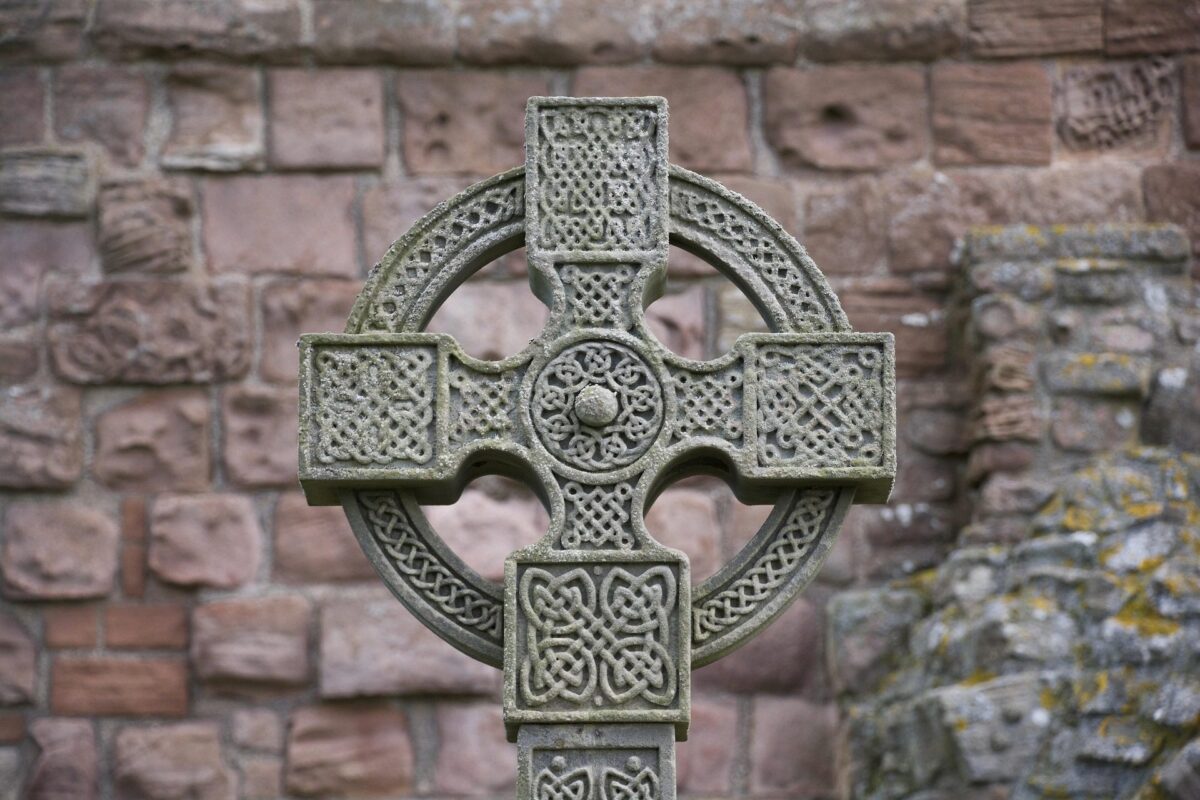
2. Cross Symbol Meaning: From Execution Device to Global Icon
The cross symbol represents faith, sacrifice, and redemption in Christian tradition — but its deeper meaning across cultures includes the four directions, the intersection of the earthly and divine, and the axis of the cosmos. It predates Christianity by thousands of years.
No symbol in history has undergone a more radical transformation.
Two thousand years ago, the cross was an instrument of state terror — a slow, public execution method designed not just to kill but to humiliate. Roman authorities used it specifically on criminals, slaves, and enemies of the empire. The shame was part of the point.
Today it’s the most recognized symbol on earth, worn by billions, printed on flags, placed atop hospitals and cathedrals. It marks the graves of soldiers. It’s stitched into Red Cross ambulances. It’s everywhere.
How does a torture device become the world’s most powerful icon? The answer involves one of history’s most improbable reversals — a small Jewish sect in a remote Roman province that turned a symbol of defeat into a symbol of something else entirely. Something that, once the idea caught hold, proved unstoppable.
But the cross’s story doesn’t begin with Christianity. Pre-Christian civilizations had their own versions, their own meanings — an iconography stretching back further than most people realize.
Read our deep dive into the cross symbol meaning to discover how its dark origins evolved into the world’s most universal icon.
3. Serpent Symbol Meaning: The One That Kills You and Cures You at Once
The serpent symbol represents duality — simultaneously standing for danger and healing, death and rebirth, wisdom and destruction. It is one of the most universally recurring symbols in human mythology, appearing independently across nearly every ancient civilization.
Name any major ancient civilization. Egypt, Greece, Mesopotamia, India, China, the Maya, the Aztec, the Hebrew tradition, the Norse. Nearly every one of them made the serpent a central symbol — and most gave it the same paradox.
The serpent is dangerous. The serpent is healing. The serpent is evil. The serpent is wisdom. It destroys and restores. It is the poison and the antidote.
This is not a coincidence. Across thousands of miles and thousands of years, independent cultures often arrived at the same symbolic equation. The snake that can kill you is also the snake that can cure you. And that tension — the same creature representing opposite things — turns out to be one of the most productive ideas in human religious history.
You see it in the Rod of Asclepius, still used as a medical talisman today. You see it in the Eden story. You see it in the kundalini tradition of India. You see it winding through nearly every mythology ever recorded.
Explore the full archetypes, mythology, and symbolism in our guide to serpent symbol meaning.
4. Number 3 Meaning: Why Three Rules Everything
The number 3 symbolizes completeness, harmony, and divine order across virtually every culture and religion in history. It is the most psychologically resonant number in human cognition — the smallest number that creates a sense of pattern, wholeness, and narrative structure.
Three wishes. The Holy Trinity. Three strikes. The three Fates. Third time’s the charm. Three acts. The triple goddess. Three primary colors. The three branches of government. Three wise men.
Once you start noticing it, you can’t stop. Three is everywhere. And it’s not a coincidence.
The number three has a stranglehold on human cognition that few other numbers come close to matching. It’s present in the religious traditions of virtually every culture. It structures storytelling. It shapes how we argue, how we pray, how we remember. A list of two items feels incomplete. A list of four feels like too much. Three is the magic number.
But why? The answer isn’t mystical — it’s cognitive. The human brain has specific reasons for preferring groups of three, reasons that have been studied by psychologists, tested by marketers, and exploited by every preacher, politician, and storyteller in history.
Explore the full history in our guide to number 3 meaning.
5. Triangle Symbol Meaning: The Shape Every Civilization Decided Was Sacred
The triangle symbol represents strength, hierarchy, and the connection between earth and the divine. Its upward-pointing form is universally associated with ascension, fire, and masculine energy — while the downward-pointing triangle represents water, the feminine, and the descent into matter.
The pyramid of Giza. The Hindu trikona. The Eye of Providence. The alchemical symbols for fire and water. The Star of David. The Pythagorean obsession with triangular numbers. The Trinity.
Every major civilization, when they needed to represent the sacred — power, divinity, the structure of the cosmos — eventually reached for a triangle.
This is strange if you think about it. Why not a circle? Why not a square? What is it about three sides and three points that made independent cultures across the ancient world decide this shape was holy?
The answer involves sacred geometry, philosophy, architecture, and a fundamental human intuition about stability and transcendence. The triangle is the simplest rigid structure in geometry. It doesn’t deform under pressure. It holds. And civilizations that were trying to build permanent things — temples, cosmologies, empires — understood that instinctively.
But the triangle isn’t just stable. It points. Upward. And that, it turns out, means everything. Read the full story in our guide to triangle symbol meaning.
6. Number 13 Meaning: The Dark History Behind the World’s Most Feared Number
The number 13 is widely considered unlucky in Western culture — but this reputation is historically recent. In many ancient traditions, including Mesoamerican and early lunar calendars, 13 was a sacred and powerful number. Its negative associations developed primarily through medieval Christian symbolism and later popular superstition.
Thirteen is the only number with its own clinical phobia name: triskaidekaphobia. Airports skip gate 13. Hotels skip the 13th floor. Some streets in Europe skip the number entirely. Friday the 13th generates a measurable dip in economic activity as people stay home.
This is a number. An abstract quantity. And it frightens people.
How did this happen? The answer involves the Last Supper, the Norse mythology of Loki, the arrest of the Knights Templar on Friday, October 13, 1307, and a 19th-century American superstition industry that transformed a vague cultural unease into a full-blown talisman of bad luck.
But there’s another side to this story. In ancient cultures — Mesoamerican traditions, early Jewish mysticism, certain pagan traditions — 13 wasn’t cursed. It was sacred. The Maya built their entire calendar around it. The number of lunar months in a year is 13. The darkness came later.
Explore the full history in our guide to number 13 meaning.
7. Ouroboros Symbol Meaning: The Snake Eating Its Own Tail Explained
The ouroboros symbol — a serpent devouring its own tail — represents the eternal cycle of creation and destruction, the infinite nature of time, and the unity of all opposites. It is one of the oldest symbols in recorded history, appearing independently across Egyptian, Norse, Greek, Hindu, and Mesoamerican traditions.
A serpent devouring its own tail. One circle. No beginning, no end.
It’s one of the oldest images in recorded history — found in Egyptian funerary texts from 1600 BCE, in Norse mythology as Jörmungandr the World Serpent, in Gnostic mysticism, in alchemical manuscripts, in Carl Jung’s writing on archetypes and the collective unconscious. It appears in ancient India, in Phoenician iconography, in the art of medieval Europe.
Across most of these cultures and centuries, the ouroboros carried essentially the same meaning: the eternal cycle. The universe consuming and recreating itself. Time without beginning or end. The self containing its own destruction and its own origin.
It’s also, in a strange way, chemically accurate. The German chemist August Kekulé claimed the ouroboros appeared to him in a dream and led him to discover the ring structure of benzene — one of the most important breakthroughs in organic chemistry. The ancient symbol turned out to describe something real about how certain molecules are built.
Explore the full history and meaning in our guide to ouroboros symbol meaning.
What These Ancient Symbols and Numbers Have in Common
Look at these seven symbols and numbers side by side and something becomes clear.
None of them are arbitrary. Each one captures a real pattern — in nature, in cognition, in the structure of experience. The spiral is in the galaxy. Three is in the way the brain chunks information. The ouroboros is in the carbon ring. The triangle doesn’t fall apart.
Ancient peoples didn’t invent these symbols out of nothing. They observed them — in the world, in their minds, in the recurring shapes of life and death — and they marked them down. They turned observations into icons. They built religions, philosophies, and sacred geometry systems around them.
That’s why these symbols survived. Not because of tradition or superstition. Because they were pointing at something real.
The oldest shapes in the world are still here because they were never just decorations. They were — and still are — attempts to say something true.
FAQ
What is the oldest symbol in human history?
The spiral is widely regarded as one of the oldest symbols in human history. Carved into stone and painted on cave walls as far back as 10,000 years ago, it appears across Neolithic sites in Ireland, Spain, and Malta — predating most written languages by thousands of years.
What is the most universal ancient symbol?
The serpent is arguably the most universal ancient symbol — it appears independently in Egyptian, Greek, Mesopotamian, Hindu, Chinese, Maya, Aztec, Norse, and Hebrew traditions, making it one of the few symbols that recurred across virtually every major civilization without direct cultural contact.
What do ancient symbols have in common across different cultures?
Most ancient symbols emerged independently in cultures that had no contact with each other, yet they consistently represent the same core ideas: cycles, duality, transformation, and the relationship between the earthly and the divine. This cross-cultural convergence suggests these symbols were responses to universal human experiences — birth, death, the seasons, the cosmos — rather than borrowed ideas.
Why did ancient civilizations use symbols?
Symbols predate writing by thousands of years. They offered a universal visual language that could communicate complex ideas — cycles, divinity, transformation — without the need for a shared spoken language. Many ancient symbols also appeared in nature itself, such as the spiral in shells and galaxies, making them intuitive rather than invented.
What is sacred geometry?
Sacred geometry is the study of geometric shapes and patterns believed to carry spiritual or cosmic significance. The triangle, spiral, and circle are among its most fundamental forms. Ancient cultures from Egypt to Greece to pre-Columbian America used these shapes in religious architecture and iconography, believing that certain proportions and forms reflected the underlying structure of the universe.
What is the difference between a symbol and an archetype?
A symbol is a visual mark that carries meaning — the spiral, the cross, the serpent. An archetype, in the Jungian sense, is the underlying psychological pattern that gives the symbol its power. The serpent, for example, is a symbol; the idea of the dangerous-yet-healing force it represents is the archetype. Symbols are the surface; archetypes are what make them resonate across cultures and centuries.
What does the ouroboros symbol mean?
The ouroboros — a serpent eating its own tail — represents the eternal cycle of creation and destruction, the infinite nature of time, and the unity of all opposites. It appears in Egyptian funerary texts dating to around 1600 BCE and recurs across Norse, Greek, Hindu, and Mesoamerican traditions with remarkably consistent meaning.
What does the number 13 mean spiritually?
The number 13 carries contradictory meanings depending on tradition. In Western culture it became associated with bad luck through medieval Christian symbolism and later popular superstition. But in Mesoamerican traditions — including the Maya — 13 was a sacred number central to the calendar. There are also 13 lunar months in a year, which gave the number sacred significance in many early lunar-based cultures.
What is the most powerful symbol in the world?
By most measures, the cross holds that title today — recognized by an estimated 2.4 billion Christians worldwide and present on the flags of more than 25 countries. That said, “powerful” depends on context: the ouroboros has arguably the widest philosophical reach across unconnected traditions, and the spiral carries the longest continuous history of any known symbol.
