Why Is the Number 13 Unlucky? Origins, Meaning, and Hidden Power Explained
Quick Summary
- The number 13 is often considered unlucky due to Norse mythology and Christian tradition, where it became associated with disruption, betrayal, and death.
- However, across cultures, 13 has also been seen as sacred — linked to lunar cycles, divine unity, and spiritual transformation.
- Psychologically, the fear of 13 persists due to confirmation bias and self-fulfilling prophecy, where belief in bad luck subtly influences outcomes.
- Today, the number is still avoided in buildings, airlines, and business decisions — not because of evidence, but because of deeply embedded cultural narratives.
Why is the number 13 considered unlucky?
The fear of 13 comes primarily from Norse mythology and Christian tradition. In Norse myth, Loki arrived as the 13th guest at a fatal feast, while in Christianity, Judas — the betrayer of Jesus — is associated with the number at the Last Supper. Over centuries, these stories turned 13 into a symbol of disruption, betrayal, and misfortune in Western culture.
Table of Contents
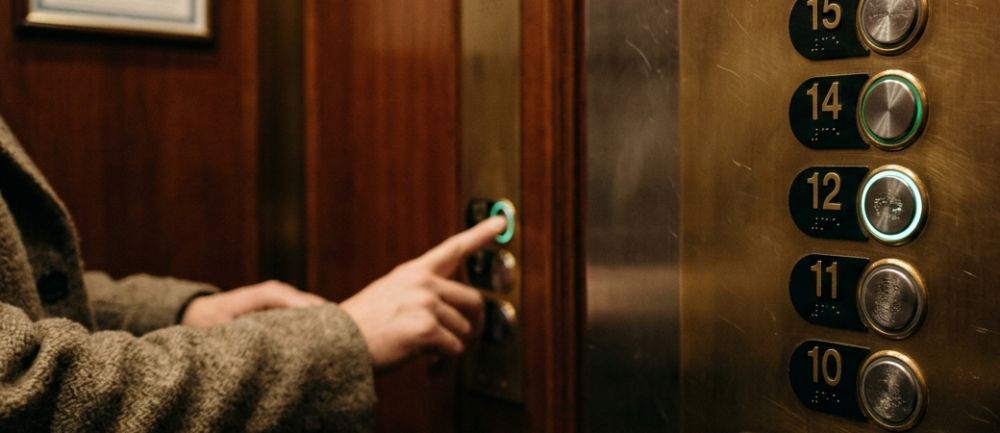
The elevator buttons skip from 12 to 14. The hotel room doesn’t exist. The seat on the airplane is simply not there. Nobody canceled the number 13 — we just quietly agreed to pretend it doesn’t count.
That collective act of erasure says everything. No other number has been so systematically avoided, feared, debated, and mythologized across so many cultures for so many centuries. The number 13 doesn’t just carry bad luck in folklore — it carries the weight of gods dying, moons cycling, and humans desperately trying to impose order on a chaotic universe.
So where did it start? And why, in a world of satellites and sequenced genomes, are we still quietly sliding past floor 13?
Where Did the Fear of 13 Come From?
The word thirteen derives from the Old English þreotēne — simply “three and ten.” No darkness in the name itself. The dread came later, imported not from the word but from the stories told around it.
The oldest documented tradition linking 13 to misfortune comes from Norse mythology. The story goes: twelve gods gathered at a feast in Valhalla. Loki, the trickster, arrived uninvited as the thirteenth guest. He orchestrated the killing of Baldr, the god of light, plunging the world toward Ragnarök. Twelve was completion. Thirteen was the intruder — the thing that broke perfection.
Christianity amplified this through the Last Supper. Thirteen figures sat at the table: Jesus and his twelve apostles. The thirteenth to dip his bread was Judas. The next morning, the crucifixion. The association between thirteen, betrayal, and death became embedded in European Christian culture with a force that folklore rarely achieves — because it wasn’t just told in stories. It was painted on cathedral walls, carved into stone, recited in churches for centuries.
There is also a calendrical argument. Ancient agricultural societies organized time around twelve lunar cycles per year. Twelve months, twelve zodiac signs, twelve gods of Olympus, twelve hours of daylight. Twelve felt complete — a closed system. Thirteen disrupted that geometry. It was the extra, the remainder, the thing left over when the clean count ended.
Mathematicians sometimes call the reverence for 12 dodecaphilia — and the affection is not irrational. Twelve divides cleanly by 2, 3, 4, and 6. It fits. It distributes evenly across almost any grouping a pre-modern society needed: months, hours, apostles, gods, tribes. Thirteen divides by almost nothing. It’s a prime number — indivisible, awkward, structurally resistant to the kind of neat partitioning that ancient minds used to organize both time and theology. The universe ran on 12. Thirteen was the remainder nobody asked for.
The technical term for fear of the number 13 is triskaidekaphobia — from the Greek treiskaideka (thirteen) and phobos (fear). It entered clinical vocabulary in the early 20th century, though the dread it names is far older.
The Last Supper linked 13 directly to betrayal and death in a culture where that imagery was omnipresent — on church walls, in sermons, in daily religious life — cementing the number’s dark reputation across an entire civilization.
Alternative Theory: 13 as Sacred, Not Sinister
Not every culture handed 13 a black mark. Some handed it a crown.
In ancient Mesoamerica, the number 13 held cosmological weight. The Mayan sacred calendar — the Tzolk’in — ran on a 260-day cycle built from 13 numbers rotating with 20 day signs. Thirteen wasn’t a portent of doom; it was the architecture of time itself, the backbone of prophecy and ritual. The Aztec heavens were structured into thirteen levels, each populated by specific deities. To inhabit 13 was to inhabit the divine.
In Kabbalistic tradition, 13 is the numerical value of echad — the Hebrew word for “one,” as in the oneness of God. It also equals the value of ahava, the Hebrew word for love. Far from cursed, 13 in this framework pulses with unity and divine love.
The lunar calendar offers another inversion. A solar year contains approximately 13 full moons. Many pre-Christian traditions — particularly those associated with goddess worship and earth-based spirituality — organized their ritual year around those 13 lunar cycles. When the Roman Church standardized the 12-month solar calendar, the 13-month lunar system became associated with paganism, with the feminine, with what needed to be suppressed. Some historians of religion argue that 13’s bad reputation in the West is partly a legacy of that suppression — that what was sacred became suspect.
Why Do People Fear the Number 13?
Fear of a number seems, on its surface, irrational. Numbers don’t act. They don’t choose. Yet triskaidekaphobia is widespread enough that researchers have studied it seriously.
Psychologists call it apophenia — the human tendency to perceive meaningful patterns in unrelated data. We don’t fear 13 because it causes harm; we notice harm when 13 is present and forget the hundreds of times it wasn’t.
The mechanism is confirmation bias. Once a belief attaches to a number, every negative event that follows it gets logged. Every neutral or positive outcome gets ignored. Friday the 13th arrives, something goes wrong — as something goes wrong on any given day — and the myth updates itself with fresh evidence.
Apollo 13 makes this viscerally clear. The mission launched at 13:13 CST on April 11, 1970, and suffered its catastrophic oxygen tank failure on April 13th. The dates feel impossibly loaded — and that’s exactly the point. The mind locks onto the 13s, files them as evidence, and quietly discards the thousands of 13s that passed without incident that same week. The crew made it home. The number gets the blame regardless. That’s confirmation bias crystallized in orbit.
There’s a social dimension too. Cultural transmission of superstition is remarkably efficient. Children learn which numbers are “bad” from their parents before they have any capacity to evaluate the claim. By the time critical thinking develops, the fear is already somatic — it lives in the body, not just the mind. That’s why educated, skeptical adults still feel a faint twinge when their bill comes to $13.00.
Psychologist Stuart Vyse, in his research on magical thinking, notes that number superstitions persist partly because they’re cost-free to maintain. Avoiding the 13th floor costs almost nothing. So the belief survives not because it’s true, but because the price of keeping it is trivially low — and the imagined price of ignoring it feels high.
There’s another layer: self-fulfilling prophecy. When people expect something to go wrong, they don’t just wait — they tense up. They second-guess. They hesitate at exactly the wrong moment. The belief reshapes the behavior. The behavior shifts the outcome. Not because 13 acted. Because the person did. The number didn’t cause the failure. The fear of the number did.
Cultural Evolution: From Gallows to Pop Culture
The fear institutionalized in the most literal way possible. In the United States, surveys suggest that roughly 80% of high-rise buildings omit a labeled 13th floor. Airlines including Air France and Lufthansa historically avoided row 13. Formula 1 retired the number from racing cars after a series of accidents. This isn’t fringe behavior. It’s corporate policy built around mass psychology.
Friday the 13th intensifies the dread. The specific combination of the sixth day of the week — itself associated with Eve’s temptation, the Crucifixion, and witches’ sabbaths in medieval Christian tradition — with the number 13 created a fear so potent it spawned one of horror cinema’s most durable franchises. The 1980 film Friday the 13th grossed $59 million on a $550,000 budget. Anxiety, it turns out, is extremely profitable.
But the culture also pushed back. Taylor Swift, born on December 13, has publicly embraced the number as her lucky charm, writing it on her hand before performances. The 13th tarot card is Death — but in traditional tarot reading, the Death card doesn’t mean literal death. It means transformation, endings that precede beginnings. Apollo 13 failed to reach the moon and brought three astronauts home alive through improvisation under impossible pressure. The number followed them into space. They came back anyway.
Is 13 Unlucky Everywhere? A Global Perspective
The global portrait of 13 is anything but uniform.
- Italy presents one of the most striking inversions in Western Europe. While much of Europe treats 13 as unlucky, in Italian popular tradition 13 is frequently considered fortuna — good luck. The phrase fare tredici (to do thirteen) means hitting the jackpot, derived from a football pools game in which scoring thirteen correct results won the grand prize.
- In China and East Asia, 13 carries no particular weight — the numbers to fear there are 4 (which sounds like “death” in Mandarin and Cantonese) and, in some regions, 14. The dread of 13 is specifically a Western cultural export, not a universal human instinct.
- Among the ancient Egyptians, according to some interpretations of funerary texts, the soul passed through 13 stages on its journey to eternal life. The thirteenth stage was transcendence — not termination. Death was a ladder, and 13 was the top rung.
- In Judaism, 13 marks the age of bar mitzvah — the moment a boy becomes accountable under religious law, a transition into responsibility and adulthood. Thirteen is not an ending. It’s an initiation.
- In pre-colonial Mexico, thirteen was so woven into cosmological structure that the entire sacred ritual calendar depended on it. The Aztec afterlife had 13 heavens. The number wasn’t feared — it was navigated, honored, built into the infrastructure of how the universe worked.
Thirteen has no fixed meaning. It holds whatever a culture pours into it. The fear is not in the number. It never was.
Thirteen has never done anything to us. It has no agency, no agenda, no grudge. What it has — what it has always had — is our reflection. Every culture that feared it built that fear from its own anxieties: a god betrayed, a savior sold, a calendar disrupted, a prime that wouldn’t cooperate. Every culture that honored it found in the same number a lunar rhythm, a sacred threshold, a divine name. The number didn’t change. The people looking at it did. That’s not a lesson about superstition. That’s a lesson about how meaning works.
Fun Fact
Did You Know? The fear of Friday the 13th — known as paraskevidekatriaphobia — is estimated to cost the U.S. economy between $800 million and $900 million every Friday the 13th, as people cancel travel plans, avoid signing contracts, and postpone surgeries. The number doesn’t cause the loss. The fear of the number does.
FAQ
Why is the number 13 considered unlucky?
The belief traces to Norse mythology (Loki as the 13th guest at a fatal feast) and Christian tradition (Judas as the 13th figure at the Last Supper), reinforced over centuries until it became a reflexive cultural assumption in much of the Western world.
What is the fear of number 13 called?
Triskaidekaphobia — from Greek treiskaideka (thirteen) and phobos (fear) — is the clinical term for an irrational dread or avoidance of the number 13.
Is 13 a lucky or unlucky number?
It depends entirely on cultural context: in Italy and parts of East Asia it is considered fortunate; in Kabbalistic tradition it represents divine oneness; in the Mayan sacred calendar it was cosmologically essential — only in Western European Christian tradition did it become widely associated with bad luck.
Why do buildings skip the 13th floor?
Building developers and hotel chains skip labeling the 13th floor primarily to avoid commercial friction — some buyers and guests refuse accommodations on that level, making the omission a straightforward business decision rooted in triskaidekaphobia.
What does 13 mean spiritually?
Spiritually, 13 has been linked to transformation (Death card in tarot), lunar cycles and feminine power in earth-based traditions, divine unity in Kabbalistic numerology, and transcendence in certain ancient Egyptian afterlife beliefs.
What does number 13 mean in numerology?
In numerology, 13 reduces to 4 (1+3), a number associated with hard work, structure, and discipline; 13 itself is often interpreted as a karmic number demanding transformation — the breakdown of old structures to build something more solid.
Are there other numbers or symbols that hold similar symbolic power?
If you enjoyed uncovering the secrets of the Triad, dive into our analysis of Triangle Symbol or discover Why Is the Number 3 So Powerful?